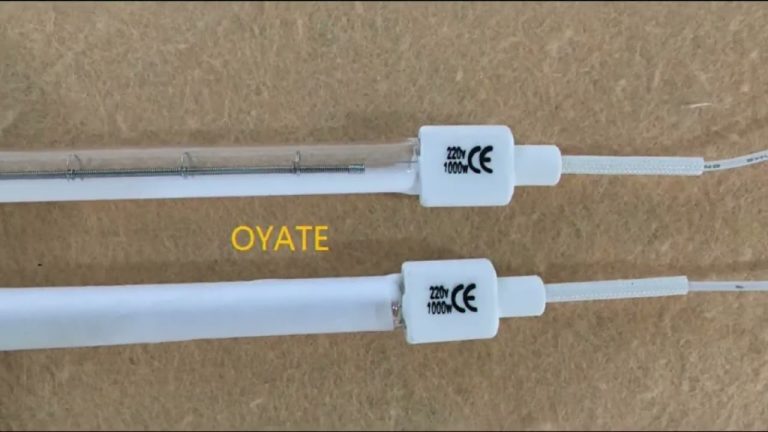
220mm 240v 500w QIR double jacketed infrared heat lamps halogen heater
Infrared heating tubes have many advantages for heating food:
1. Heating principle and characteristics
Infrared heating tubes heat food by emitting infrared radiation. Infrared rays have strong penetrating power, which can make the molecules inside the food absorb heat directly, thus achieving fast and uniform heating.
Efficient and fast: Infrared heating tubes can generate a large amount of heat energy in a short time, so that food can be heated quickly. Compared with traditional heating methods, such as stove heating or microwave heating, infrared heating can greatly shorten the heating time and improve cooking efficiency. For example, using infrared heating tubes to bake bread, it only takes a few minutes to bake golden and crispy bread slices.
Uniform heating: Infrared radiation can penetrate food evenly, so that all parts of the food are heated at the same time, avoiding local overheating or undercooking. This ensures that the taste and nutritional content of the food are uniform. For example, when roasting chicken, infrared heating can make all parts of the chicken evenly heated, and the roasted chicken is tender and juicy.
Maintain nutrition: Since infrared heating is a gentle heating method, it can heat food to the required temperature in a shorter time, reducing the loss of nutrients in food. At the same time, infrared heating does not produce open flames, avoiding the production of harmful substances in food due to over-grilling. For example, heating vegetables with infrared rays can better preserve the vitamins and minerals in the vegetables.
Energy saving and environmental protection: The infrared heating tube has a high electric heat conversion efficiency, which can convert most of the electrical energy into thermal energy, reducing energy waste. In addition, infrared heating does not require preheating and can be turned on and used at any time, further reducing energy consumption. At the same time, no harmful gases and pollutants are produced during infrared heating, which is more environmentally friendly.