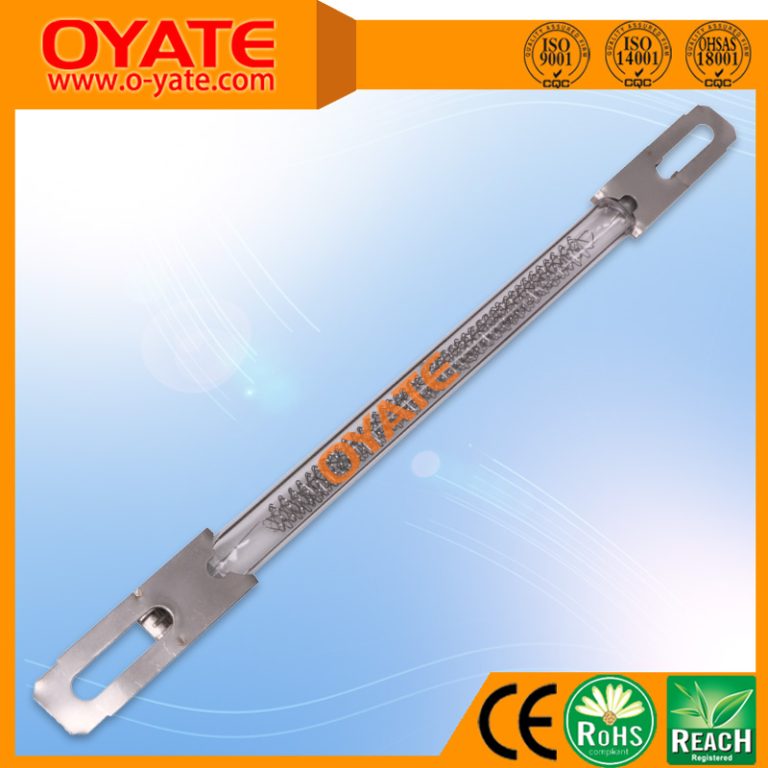
Infrared halogen heating tubes are generally not directly used for the core imaging function of spectral imagers, but they may play a certain role in some related applications or auxiliary aspects of spectral imagers. The following are some specific situations:
As an auxiliary heating source
Stabilize the operating temperature of the instrument: Some optical components, detectors, etc. in the spectral imager are sensitive to temperature changes. Temperature fluctuations may cause instrument performance degradation, spectral drift and other problems. Infrared halogen heating tubes can provide stable heating for the instrument, keep the inside of the instrument within a suitable operating temperature range, and help improve the accuracy and stability of spectral imaging.
Prevent condensation of water vapor: In some environments, such as humid outdoor or low temperature laboratory, water vapor may condense on the surface of the optical components of the spectral imager, affecting the transmission of light and imaging quality. The heat generated by the infrared halogen heating tube can prevent water vapor from condensing on the surface and inside of the instrument, keeping the optical path clear.
Sample pretreatment
Dry sample: When the sample needs to be analyzed for spectral imaging, if the sample contains water or other volatile substances, it may interfere with the collection and analysis of spectral signals. Infrared halogen heating tubes can quickly and effectively dry samples, remove moisture and volatile components, and make samples more suitable for spectral imaging, thereby improving the quality and reliability of spectral data.
Excite sample characteristics: For some specific samples, the radiation of infrared halogen heating tubes can stimulate certain characteristics of the sample, making it present more obvious features in spectral imaging. For example, when performing infrared spectral imaging on certain materials, proper heating can change the molecular structure or chemical bond state of the material, thereby enhancing the interaction with specific spectral bands and helping to more accurately analyze the composition and structure of the sample.
Calibration and testing
Wavelength calibration: Although spectral imagers usually use gratings, prisms and other spectroscopic elements to achieve accurate spectral splitting, infrared halogen heating tubes themselves have a wide spectral range and specific emission spectral characteristics, and can be used as an auxiliary light source for wavelength calibration. By comparing with the spectrum of halogen heating tubes with known spectral characteristics, the spectral response of the imager can be calibrated and verified to ensure the accuracy and consistency of the instrument in different bands.
Performance test: During the research and development, production and maintenance of spectral imagers, various performance indicators of the instrument need to be tested and evaluated. Infrared halogen heating tubes can be used as a stable and controllable light source to test the sensitivity, resolution, signal-to-noise ratio and other performance parameters of imagers, helping engineers understand the working status and performance of the instrument so as to make corresponding adjustments and optimizations.
Similar Posts