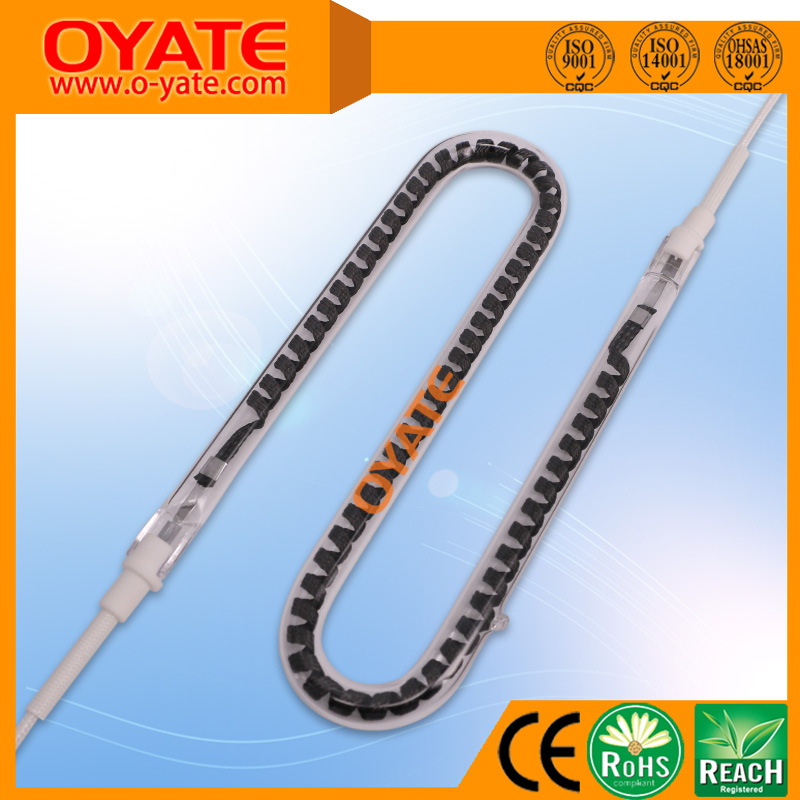
s شكل نصف أبيض مطلي 1300W 1800W مصباح الأشعة تحت الحمراء الكربون
فيما يلي مقدمة مفصلة:
أداء التدفئة الفعال
تسخين سريع: أنبوب تسخين ألياف الكربون على شكل S له سرعة تسخين سريعة للغاية. عادة ما يستغرق الأمر بضع ثوانٍ للوصول إلى درجة حرارة العمل والبدء في إخراج كمية كبيرة من الحرارة بالأشعة تحت الحمراء. على سبيل المثال ، في مجفف طباعة صغير ، يمكن أن يؤدي استخدام أنابيب تسخين ألياف الكربون على شكل S إلى جعل درجة الحرارة الداخلية للمجفف تصل إلى درجة حرارة التجفيف المطلوبة في غضون 5-10 دقائق. بالمقارنة مع طرق التدفئة التقليدية ، فإنه يقصر بشكل كبير وقت التسخين ويحسن كفاءة الإنتاج.
خصائص التدفئة الموحدة
السيطرة على درجة الحرارة الدقيقة
تنظيم درجة الحرارة الحساسة: يستجيب أنبوب تسخين ألياف الكربون على شكل S بشكل حساس للغاية لنظام التحكم في درجة الحرارة. أثناء عملية التحكم في درجة الحرارة لمجفف الطباعة ، يمكن التحكم في درجة الحرارة داخل الماكينة بدقة عن طريق ضبط قوة أنبوب التدفئة. مع أجهزة استشعار ووحدات تحكم درجة الحرارة المتقدمة ، يمكن التحكم في درجة الحرارة ضمن نطاق دقيق للغاية لتلبية متطلبات درجة الحرارة لمواد الطباعة المختلفة وعمليات التجفيف. على سبيل المثال ، عند تجفيف الأقمشة المطبوعة الراقية مثل الحرير ، يمكن أن تصل دقة التحكم في درجة الحرارة إلى ± 1 ℃-± 2 ℃ ، مما يضمن استقرار عملية التجفيف وجودة المنتج.
تكيف مع مجموعة متنوعة من مواد الطباعة وعمليات التجفيف
دعم عملية التجفيف المرن: يمكن أن يدعم مجموعة متنوعة من عمليات التجفيف ، مثل التجفيف المستمر ، التجفيف المتقطع ، تجفيف سريع في درجة الحرارة العالية ، التجفيف البطيء في درجة الحرارة المنخفضة ، وما إلى ذلك عن طريق ضبط قوة أنبوب التدفئة ، وسرعة نقل المجفف ، وحجم التهوية وغيرها من المعلمات ، يمكن أن تكون متطلبات عملية التجفيف مختلفة. في التطبيقات العملية ، يمكن اختيار عملية التجفيف وتعديلها بمرونة وفقًا لعوامل مثل طبيعة مادة الطباعة ، ومحتوى الرطوبة ، ومتطلبات الجودة بعد الطباعة لتلبية احتياجات الإنتاج المتنوعة.
Sensitive temperature regulation: The S-shaped carbon fiber heating tube responds very sensitively to the temperature control system. During the temperature control process of the printing dryer, the temperature inside the machine can be accurately controlled by adjusting the power of the heating tube. With advanced temperature sensors and controllers, the temperature can be controlled within a very precise range to meet the temperature requirements of various printing materials and drying processes. For example, when drying high-end printed fabrics such as silk, the temperature control accuracy can reach ±1℃-±2℃, ensuring the stability of the drying process and product quality.
Fast temperature response: When the temperature of the printing dryer needs to be adjusted, the S-shaped carbon fiber heating tube can respond quickly. In some cases where the temperature needs to be dynamically adjusted according to the characteristics of the printed material or the drying progress, such as requiring a high temperature to quickly remove a large amount of moisture in the early stage of drying, and then lowering the temperature in the later stage of drying to avoid changes in the printed color, the S-shaped carbon fiber heating tube can quickly respond to these temperature change requirements and improve the flexibility of the drying process.
Adapt to a variety of printing materials and drying processes
Applicability of various materials: The S-shaped carbon fiber heating tube can be applied to the drying of various different types of printing materials, including but not limited to textiles, paper, leather, plastic film, etc. Whether it is printed fabrics made of natural or synthetic fibers, or paper of different weights and textures, they can be effectively dried under its infrared radiation without damaging the printed pattern and the material itself.
Flexible drying process support: It can support a variety of drying processes, such as continuous drying, intermittent drying, high-temperature fast drying, low-temperature slow drying, etc. By adjusting the power of the heating tube, the conveying speed of the dryer, the ventilation volume and other parameters, different drying process requirements can be achieved. In practical applications, the drying process can be flexibly selected and adjusted according to factors such as the nature of the printing material, the moisture content, and the quality requirements after printing to meet diverse production needs.