Table of Contents
Understanding NIR Heating Technologies
NIR (Near-Infrared) heating technologies have become increasingly popular in the PET (Polyethylene Terephthalate) bottle blow molding process. This method utilizes infrared radiation to heat the preforms of PET bottles, which significantly enhances the efficiency and quality of the molding process. Unlike conventional heating methods that rely on conduction or convection, NIR heating directly targets the material, promoting uniformity and reducing energy consumption.
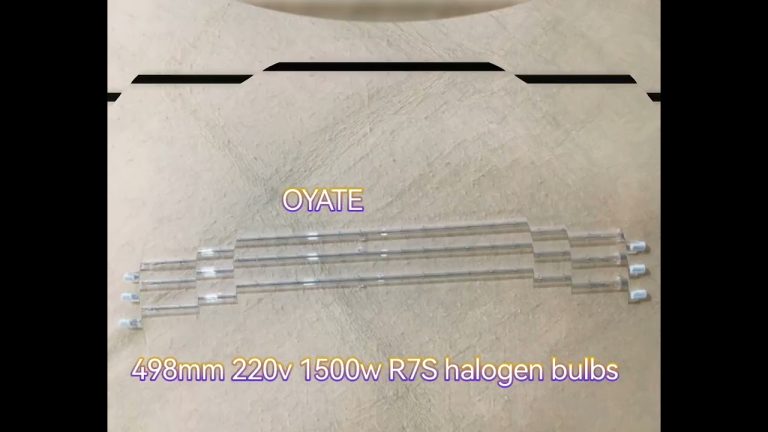
| Name | Halogen infrared heat lamp |
| Brand | OYATE |
The primary advantage of NIR heating is its ability to rapidly and precisely heat specific areas of the PET preform. This targeted approach allows for a more controlled heating environment, which is crucial for achieving the desired temperature profile necessary for successful blow molding. As a result, manufacturers can produce bottles with better dimensional accuracy and improved mechanical properties.

Moreover, the integration of NIR heating technologies can lead to significant time savings in the production cycle. The quick response of NIR systems means that preforms can be heated and molded in a fraction of the time compared to traditional methods. This efficiency not only accelerates production rates but also reduces operational costs, making it an attractive option for manufacturers looking to optimize their processes.
Benefits of NIR Heating in Blow Molding
One of the key benefits of using NIR heating technologies in PET bottle blow molding is the reduction in energy consumption. Traditional heating methods often require extensive time and energy to achieve the desired temperatures, leading to higher operational costs. In contrast, NIR heating provides immediate energy transfer, allowing manufacturers to cut down on energy usage while maintaining high production output.
Another significant advantage is the enhanced quality of the final product. NIR heating ensures that the PET material is evenly heated, which minimizes the risk of defects such as warping or inconsistent wall thickness. This uniformity is essential for producing high-quality bottles that meet industry standards, ultimately contributing to higher customer satisfaction and reduced waste.
Additionally, NIR heating technologies facilitate greater design flexibility. Manufacturers can experiment with various bottle shapes and sizes without worrying about the limitations imposed by conventional heating methods. The precise control offered by NIR systems enables innovation in bottle design, allowing companies to cater to evolving market demands and consumer preferences.
Environmental Impact and Sustainability
The implementation of NIR heating technologies in the PET bottle blow molding process aligns with sustainability goals within the industry. By reducing energy consumption and improving production efficiency, NIR heating contributes to lower carbon emissions associated with manufacturing. This eco-friendly approach is becoming increasingly important as companies strive to meet regulatory requirements and consumer expectations regarding environmental responsibility.
Furthermore, NIR heating can enhance the recyclability of PET bottles. With precise heating capabilities, manufacturers can better control the quality of the PET material during the molding process. High-quality PET is easier to recycle, thus promoting a circular economy where materials are reused rather than discarded. This focus on sustainability not only benefits the environment but also positions companies favorably in the eyes of environmentally conscious consumers.
In addition, the long-term cost savings associated with NIR heating technologies can encourage investment in more sustainable practices. As companies observe the financial benefits of reduced energy costs and improved product quality, they are more likely to explore additional eco-friendly initiatives. This shift towards sustainable production methods is critical for the future of the packaging industry.